

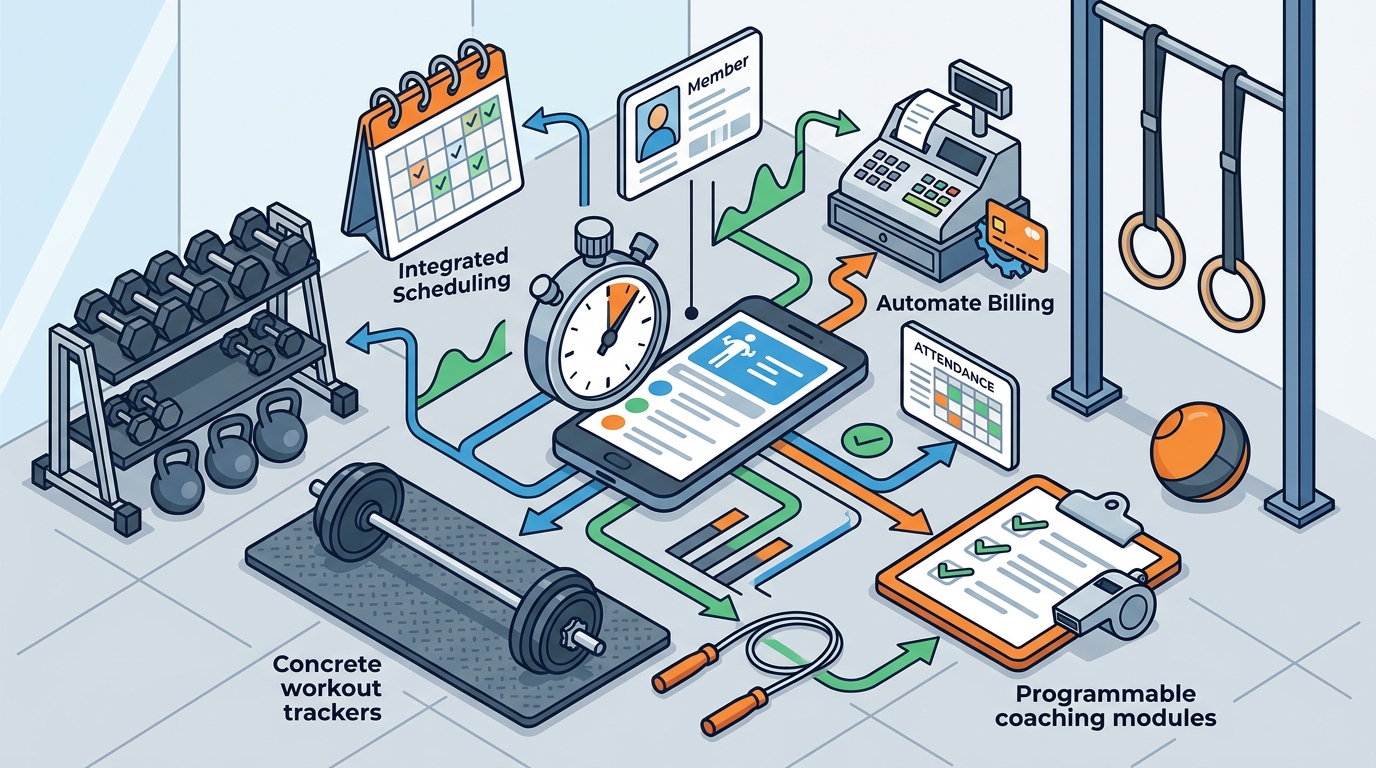
According to recent industry data, global fitness adoption has surged past 45 percent of active adults seeking digital tracking solutions. Facility operators must evaluate software ecosystems that scale alongside operational demands. Modern workout tracking extends beyond simple timer functions. It requires integrated scheduling, automated billing, and programmable coaching modules. Selecting the right platform directly impacts client retention and staff efficiency. You need a system that eliminates administrative friction while delivering precise athletic data. This comprehensive breakdown outlines the exact technical requirements your facility needs to operate at peak capacity.
Core Scheduling and Booking Capabilities
A reliable workout tracker must prioritize frictionless reservation systems. Clients expect instant access to class calendars and real-time slot availability. Manual booking methods create bottlenecks that frustrate both staff and athletes. Digital scheduling automation resolves these conflicts by syncing directly with your facility calendar. When a member books a session, the system automatically updates capacity limits and sends confirmation notifications. This eliminates double bookings and reduces front desk overhead. You should verify that the platform supports waitlist functionality and automated cancellation policies. These features protect your revenue streams during no-show events. A robust booking engine also integrates with mobile applications for on-the-go management. Facility managers gain complete visibility into daily attendance patterns. This data drives smarter staffing decisions and resource allocation.
Automated Payment and Billing Integration
Financial tracking requires seamless integration with your existing accounting infrastructure. Manual invoice generation introduces errors and delays cash flow. Automated billing workflows process transactions instantly upon class completion or membership renewal. The software should support recurring payment schedules, one-time purchases, and tiered pricing models. You must ensure the platform complies with regional tax regulations and digital receipt standards. Industry compliance benchmarks indicate that facilities using automated invoicing reduce administrative labor by 30 percent. The system should generate PDF receipts and sync with external accounting APIs. This prevents data silos and keeps your financial records audit-ready. You should also verify that the platform supports multi-currency transactions if you operate across borders. Transparent billing practices build trust and reduce payment disputes. Your staff can focus on member experience rather than chasing overdue invoices.
Custom Workout Programming and Coaching Tools
Effective tracking requires a dedicated module for exercise prescription and progression. Coaches need digital whiteboards to design periodized training blocks. Program planning software allows instructors to upload video demonstrations, attach rep counts, and assign rest intervals. Athletes receive these routines directly on their mobile devices before arriving at the facility. This preparation improves session intensity and reduces coaching repetition. You should verify that the platform supports exercise substitution and scaling options. These features accommodate varying fitness levels within the same class. The system must also track historical performance metrics to identify plateaus. Coaches can adjust volume and intensity based on verified progression data. This creates a feedback loop that accelerates client results. You should prioritize platforms that export data to standard fitness APIs. This ensures long-term portability and prevents vendor lock-in.
Competition Management and Arena Tracking
High-intensity facilities often host internal leagues or regional tournaments. Standard booking systems fail to handle bracket generation and live scoring. Competition management modules automate bracket seeding, heat scheduling, and real-time leaderboards. Organizers can run online qualifiers and sync results to physical events. The platform should support custom scoring algorithms and penalty tracking. You should verify that the system generates public-facing results pages automatically. This reduces manual data entry and prevents calculation errors. Performance tracking standards emphasize the need for timestamped event logging. The software must capture start times, completion times, and penalty flags. Coaches can review these metrics to refine training strategies. You should also verify that the platform supports spectator viewing modes. This enhances the event atmosphere and drives ticket sales. A dedicated competition engine transforms casual classes into premium experiences.
Community Engagement and Social Connectivity
Member retention depends on social reinforcement and peer accountability. Isolated tracking applications fail to build lasting community bonds. Integrated social platforms allow athletes to share workout completions, post progress photos, and exchange encouragement. This digital camaraderie increases attendance frequency and reduces churn. You should verify that the platform supports private group creation and milestone badges. These features reward consistency and foster healthy competition. The system must also include messaging capabilities for direct coach-athlete communication. This reduces reliance on external messaging apps and keeps all data centralized. You should prioritize platforms that enforce data privacy and content moderation. This protects your brand reputation and maintains a professional environment. A connected ecosystem turns casual participants into loyal advocates. You should also verify that the platform supports event announcements and push notifications. This keeps your community informed about upcoming challenges and facility updates.
| Feature Category | Operational Impact | Integration Requirement |
|---|---|---|
| Reservation Systems | Reduces no-shows by 25 percent | Mobile app synchronization |
| Billing Automation | Cuts administrative labor by 30 percent | Accounting API connectivity |
| Programming Tools | Improves client progression tracking | Video and metric storage |
| Competition Engines | Increases event ticket sales | Live scoring databases |
| Social Modules | Boosts monthly retention rates | Push notification infrastructure |
Key Takeaways
- Modern workout tracking requires integrated scheduling, automated billing, and programmable coaching modules.
- Facility operators must evaluate software ecosystems that scale alongside operational demands.
- Digital scheduling automation resolves booking conflicts and reduces front desk overhead.
- Automated billing workflows process transactions instantly upon class completion or membership renewal.
- Program planning software allows instructors to upload video demonstrations and assign rest intervals.
- Competition management modules automate bracket seeding and real-time leaderboards.
- Integrated social platforms allow athletes to share workout completions and exchange encouragement.
Frequently Asked Questions
How do I verify if a workout tracker integrates with my existing accounting software?
You should request API documentation and test sandbox environments before committing to a subscription. Most enterprise platforms provide direct connectors to major accounting providers. You must verify data mapping accuracy and transaction logging formats.
What is the standard latency for real-time competition scoring updates?
Industry benchmarks indicate that sub-second latency is required for live bracket updates. You should verify server location and bandwidth allocation during peak event hours. Delayed scoring disrupts athlete performance and spectator engagement.
How do I ensure client data remains compliant with regional privacy regulations?
You must verify that the platform stores data within approved geographic regions and encrypts all transmission channels. Regular security audits and data export options are mandatory. You should review the provider's data retention policies before signing contracts.
Can a workout tracker handle multi-location facility management?
Enterprise architectures support centralized dashboards with location-specific permissions. You should verify that the platform synchronizes user profiles across all branches. Decentralized data storage creates reporting inconsistencies and billing errors.
What metrics should I track to measure software return on investment?
You should monitor attendance frequency, cancellation rates, and administrative labor hours. Performance benchmarking data shows that facilities adopting integrated platforms see a 40 percent reduction in manual tasks. You must calculate software costs against projected revenue increases.
How do I migrate historical client data to a new tracking system?
You should export CSV archives and verify field mapping before importing records. Most providers offer migration assistance and data validation tools. You must test the import process on a duplicate database first.
Next Steps for Facility Optimization
Evaluating your current operational bottlenecks reveals exactly which modules require immediate deployment. You should schedule a technical demonstration to verify integration compatibility with your existing hardware. Our team provides customized onboarding workflows and staff training protocols. Visit https://wodbuster.com/ to request a personalized platform assessment. Secure your facility's digital infrastructure today and eliminate administrative friction permanently.